



Author: John Roberts Toyota
Welcome, Manchester drivers! This guide is crafted for you, ensuring your Toyota remains reliable and ready for every journey.
Why Should You Follow a Maintenance Schedule for Your Toyota?
For Toyota owners in Manchester, adhering to a maintenance schedule is crucial for safeguarding your investment and ensuring your vehicle’s reliability in our local climate. With the intense summer heat and humidity, your Toyota’s fluids, belts, and filters are put to the test. The heavy pollen in spring can also clog air filters, making regular service essential to combat these conditions.
Consistent maintenance directly impacts your vehicle’s performance, fuel efficiency, and safety. A well-maintained Toyota, like the RAV4 or Tacoma, handles the daily commute via I-24 or a quick trip to Old Stone Fort with ease. This commitment to upkeep not only helps prevent breakdowns but also ensures that your vehicle runs as smoothly as it was designed to. This peace of mind is invaluable, particularly during the bustling Bonnaroo festival season. For further insights into vehicle care, check out resources like Edmunds.
How Does Toyota’s Service Reminder System Work?
Many Toyota vehicles are equipped to notify drivers when it’s time for maintenance. Depending on the model and year, this reminder might be a straightforward time or mileage counter, or it could estimate service needs based on how the vehicle is used. This flexibility helps ensure that you receive timely reminders tailored to your driving habits.
When it’s time for service, you might see a message on your dashboard, a service indicator light (like a wrench), a maintenance reminder, or even an oil-life percentage display. Since the specifics can vary by model and trim, it’s important to consult your owner’s manual for the precise maintenance schedule. Additionally, driving patterns in and around Manchester—such as frequent short trips, stop-and-go traffic on U.S. Route 41, or towing around the Duck River—can influence how often maintenance is necessary.
What Does the Primary Service Reminder Mean?
After understanding how service reminders work in general, the next step is knowing what the primary reminder is telling you. The owner’s manual and in-vehicle maintenance information are the best resources to consult for precise service details.
What Do Additional Service Indicators Mean?
Many vehicles offer extra details beyond the primary service reminder, such as additional items, symbols, or menu entries. These indicators help pinpoint the type of service needed, though their meanings can vary by model. Here are some common examples you might see in your vehicle. Always check your owner’s manual for specifics.
- Tire rotation: Regular tire rotation promotes even tread wear, crucial for handling, especially if you’re frequently driving through stop-and-go traffic in Manchester or taking longer trips on I-24.
- Engine and cabin air filters: Maintaining clean engine and cabin air filters is vital for performance and air quality. Dust and pollen from the local environment can clog these filters, particularly in the spring.
- Transmission fluid: Watch for recommendations on transmission fluid service, especially if you often drive in stop-and-go conditions or on hilly terrain, which can lead to higher transmission temperatures.
- Spark plugs and valve clearance check (when applicable): Scheduled spark plug replacement is crucial for engine efficiency, and some engines also require valve clearance checks, particularly as they accumulate mileage.
- Engine coolant: Proper coolant levels are essential for regulating engine temperature, especially during hot summer months or extended highway driving which can stress the cooling system.
- Rear differential fluid (AWD/4WD, if equipped): If your vehicle has AWD or 4WD, keep an eye on differential fluid, especially when navigating slippery surfaces or uneven terrain during the rainy season.
- Brake fluid: Over time, brake fluid can absorb moisture, impacting braking performance. If your vehicle indicates a need for brake fluid service, follow the suggested maintenance intervals.
What is a Typical Toyota Service Schedule for Manchester Drivers?

Understanding a typical service schedule can be a great way to plan for your vehicle’s needs, especially when navigating the roads of Manchester, TN. While your Toyota may have built-in service reminders, this general outline serves as a helpful reference alongside your owner’s manual and any available in-vehicle guidance. It’s tailored to the diverse driving conditions in our area, such as frequent short trips, stop-and-go traffic on Hillsboro Boulevard, and the seasonal temperature swings that can affect your vehicle’s performance.
What Services Are Needed in the First 30,000 Miles?
During the initial 30,000 miles of ownership, most drivers focus on essential services such as routine oil changes, tire rotations, and filter maintenance. The specific timing for these services can differ based on your Toyota model, driving habits, and the recommendations found in the owner’s manual.
Oil service: Typically, oil changes may be needed every few thousand miles, often reaching intervals of around 7,500 to 10,000 miles depending on usage. For those frequently driving in stop-and-go traffic around Manchester or nearby Tullahoma and Murfreesboro, like on US-41 or I-24, you might find that your vehicle requires oil service sooner due to more demanding driving conditions.
Tires and filters: Tire rotations are commonly scheduled around every 5,000 to 7,500 miles, often aligned with oil changes to promote even tire wear. Additionally, it’s wise to keep an eye on your engine and cabin air filters, especially with the local environment’s pollen and dust levels, which can lead to earlier replacements. Many drivers in the Manchester area typically replace these filters somewhere between 15,000 and 30,000 miles, depending on how often they’re exposed to those conditions.
What Maintenance Should Be Done Between 30,000 and 60,000 Miles?
As your Toyota approaches the 30,000 to 60,000-mile mark, maintenance often shifts from basic upkeep to more critical services that ensure the longevity and reliability of your vehicle. This includes essential fluid changes and more frequent inspections tailored to your specific model, powertrain, and driving conditions. Always refer to your owner’s manual and in-vehicle maintenance reminders for the most accurate information.
What Major Services are Required Approaching 100,000 Miles?
As your Toyota approaches the 100,000-mile mark, several significant maintenance tasks often come into play. However, the specific needs can vary based on the model and engine type, so it’s essential to consult your owner’s manual and any in-vehicle maintenance information for guidance tailored to your vehicle.
Spark plugs: Many Toyota models, including the Camry and RAV4, may recommend spark plug replacement around this time. Fresh spark plugs can enhance engine efficiency, ensure smoother starts, and maintain reliability as wear accumulates over years of driving. For instance, a well-maintained engine runs more efficiently, which is particularly beneficial for those commuting on I-24 or navigating the winding roads to Old Stone Fort State Archaeological Park.
Timing belt (if equipped) and coolant service: Some older Toyota engines utilize a timing belt that may require replacement at specific intervals, while many newer engines feature timing chains that typically don’t have a routine replacement schedule. Additionally, a coolant flush or replacement is often recommended to protect the cooling system from corrosion and overheating, which is crucial for maintaining optimal performance in varying weather conditions. Staying on top of these services not only helps ensure reliability but can also bolster your vehicle’s resale value; you can find general maintenance insights on Kelley Blue Book.
Why is Local Expertise Important for Servicing Your Toyota?
Having a service team that understands the unique climate and road conditions in Manchester, TN, is invaluable for maintaining your Toyota. Here, summer heat can put extra strain on your vehicle’s cooling system, while high humidity levels contribute to wear on essential components. Additionally, pollen from local trees during spring can clog air filters faster than in drier regions. Our technicians at John Roberts Toyota are trained to recognize these region-specific issues and to inspect for wear patterns caused by local driving conditions, from the stop-and-go traffic on Hillsboro Boulevard to the winding backroads leading to Old Stone Fort State Archaeological Park.
Understanding these local factors means our service team can proactively address potential problems, ensuring your Toyota stays in peak condition. For more insights on safety and maintenance, visit the National Highway Traffic Safety Administration (NHTSA) for comprehensive resources tailored to your driving needs.
Frequently Asked Questions (FAQs)
How often should I really change my oil in Manchester’s climate?
Your best guide is your vehicle’s service reminder or owner’s manual, as oil change intervals can vary with driving habits and conditions. In Manchester, with its varying temperatures and occasional snow, most drivers find that oil changes are recommended based on their vehicle’s specifications.
Are all-season tires enough for the Manchester area?
For most of the year, high-quality all-season tires perform well in Manchester’s climate, providing reliable traction during rain and the light snow we sometimes see in winter months. However, if you frequently drive on rural roads or during heavy rain, consider checking your tire tread more often.
Does commuting on local highways affect my service intervals?
Yes, it does. If you find yourself in stop-and-go traffic on U.S. Route 41 or I-24, it can be harder on your engine and brakes compared to steady highway driving. Vehicles equipped with a service reminder system may suggest services sooner if they detect this type of driving pattern.
With seasonal pollen, how often should I change my cabin air filter?
We recommend inspecting your cabin air filter regularly, particularly after the heavy pollen season in spring. Many drivers in the area find that regular replacement helps maintain clean air inside their vehicle and keeps the A/C system working efficiently.
Is AWD worth it for Manchester drivers?
While not essential for everyone, a vehicle with available AWD can be beneficial during Manchester’s sudden rainstorms, enhancing traction and stability on wet roads. This added confidence can be especially useful for those commuting on highways or navigating rural backroads.
My vehicle doesn’t have a service reminder system. What schedule should I follow?
For older models without a service reminder system, following the service intervals in your owner’s manual for oil changes, filters, and fluids will help keep your vehicle in top condition.
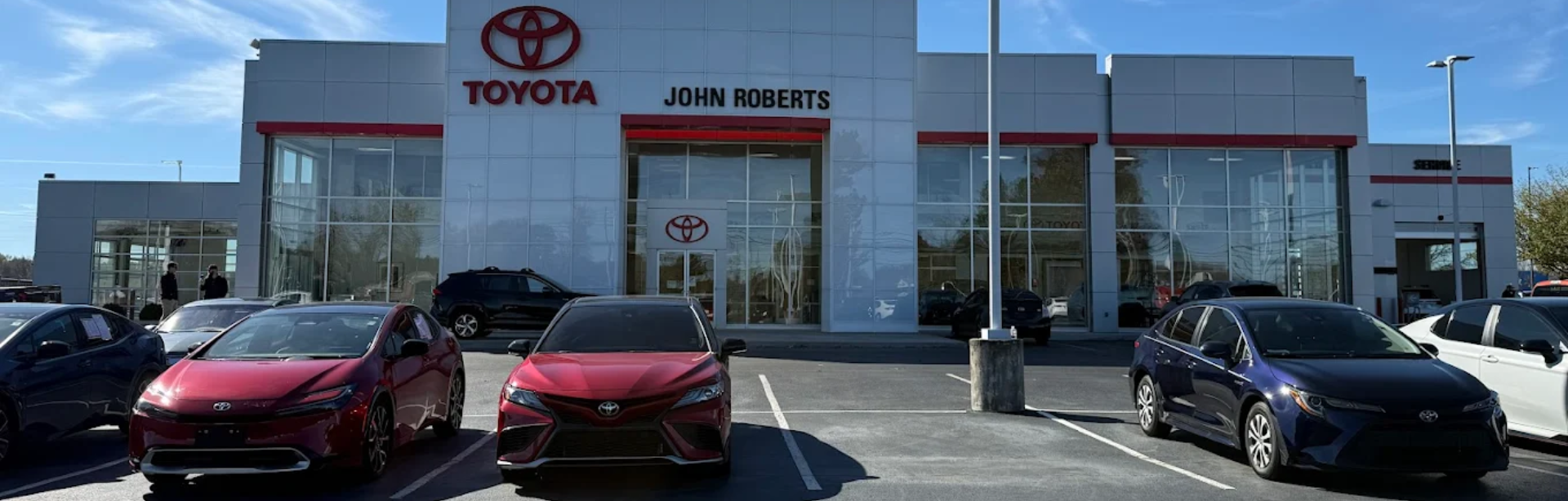
About John Roberts Toyota
The John Roberts Toyota team is dedicated to providing an exceptional automotive experience. Our family-owned dealership was honored with the Toyota President’s Award in 1996, 2002, 2007, 2010, 2011, 2012, 2013, and 2018, as recognition of our excellence in customer satisfaction and service. We offer special benefits like a Lifetime Powertrain Warranty on many vehicles, and our ASE and Toyota Certified mechanics ensure your car is in expert hands. To make your experience easy and enjoyable, we provide online purchasing, home delivery, and a pet-friendly showroom full of comfort and convenience. You can trust our award-winning team for knowledgeable, friendly service on every visit.
Related Articles:
York, PA Driver’s Guide: Finding a Toyota Dealer You Can Trust
Connect with us


